
NASA study on Earth’s water origin presents new evidence that questions the long-standing idea that meteorites delivered a large portion of Earth’s water. By examining lunar samples collected decades ago, scientists reveal that meteorite contributions may be far smaller than earlier estimates suggested.
The findings offer a fresh perspective on one of planetary science’s most enduring questions: how Earth acquired its vast oceans.
Why Earth’s Water Origin Remains a Scientific Puzzle
Earth formed in a region of the early solar system that was likely too warm for water ice to remain stable. This led scientists to propose that water arrived later, carried by water-rich meteorites and asteroids striking the young planet.
For years, this explanation gained traction through chemical analysis of meteorites and planetary material. However, new research revisits this assumption using a different and more stable analytical approach.
Studying the Moon to Understand Earth
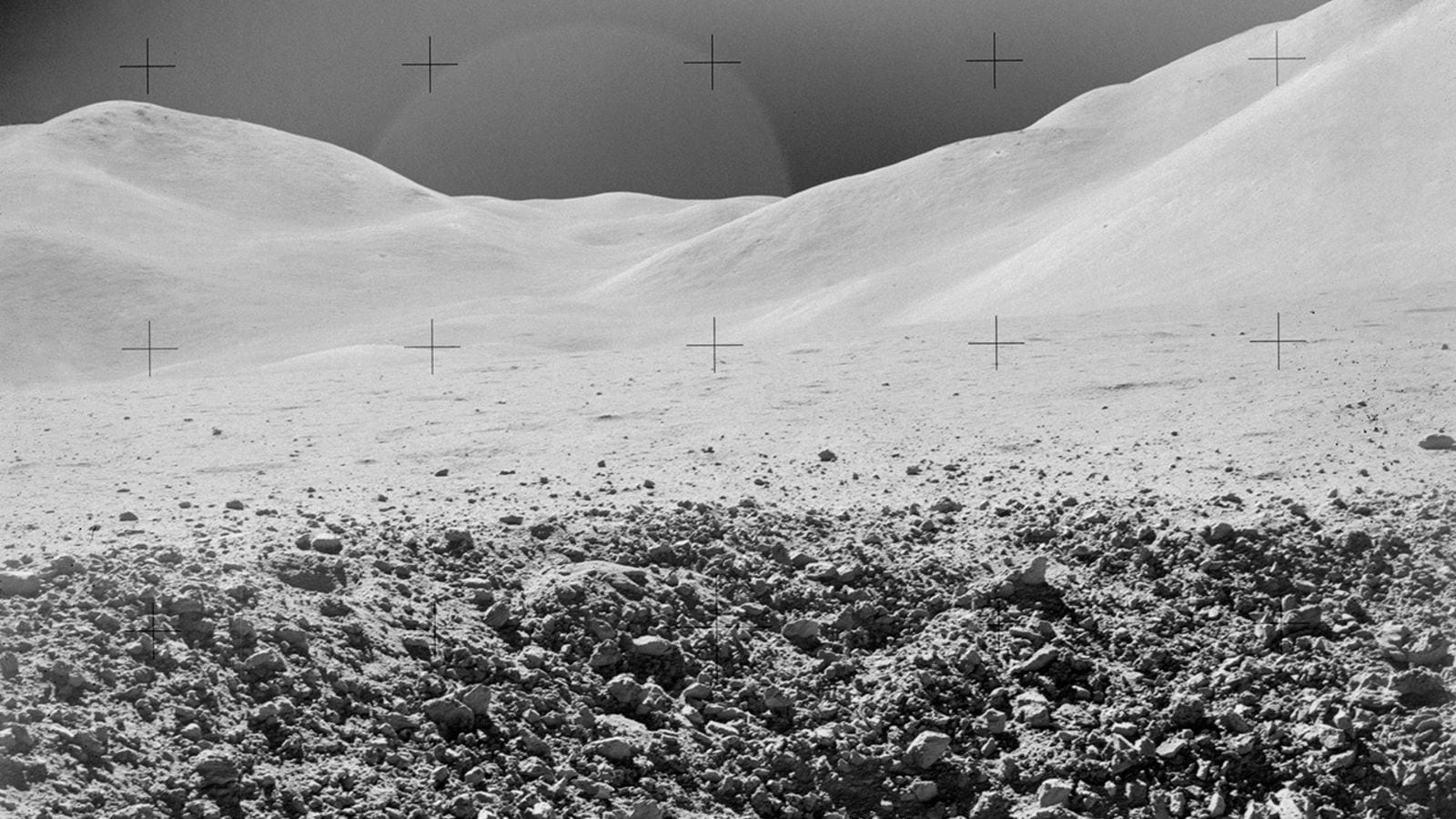
To investigate Earth’s water history, researchers analyzed lunar regolith, fine dust and rock fragments covering the Moon’s surface, collected during the study.
The Moon serves as an ideal reference point because it lacks oceans, plate tectonics, and atmospheric weathering. Material delivered to the Moon largely remains preserved, offering a clearer record of early solar system impacts.
Oxygen Isotopes Offer a Clearer Signal
Earlier studies relied heavily on metal-loving elements to estimate meteorite contributions. Over billions of years, repeated impacts mixed and altered these elements, reducing their reliability.
The new NASA study instead focuses on oxygen isotopes. Oxygen makes up a large portion of rocky material and remains chemically stable even after repeated impacts, making it a more trustworthy indicator.
By comparing oxygen isotope ratios in lunar samples, scientists determine how much extraterrestrial material accumulated on the Moon after its formation.
What the Results Reveal About Meteorites and Water
The analysis shows that late-arriving meteorites, those striking the inner solar system after about four billion years ago, contributed a meaningful amount of water to the Moon.
However, when scientists scale this contribution to the size and volume of Earth’s oceans, the amount becomes surprisingly small. This suggests meteorites alone cannot account for Earth’s vast water reserves.
These findings significantly weaken the theory that late meteorite impacts served as the primary source of Earth’s water.
Why Decades-Old Samples Still Matter
The study highlights the lasting scientific value of lunar samples collected more than 50 years ago. Advances in analytical techniques continue to unlock new insights from these historic materials.
The research appears in the study, reinforcing how modern methods reshape long-standing scientific debates.
Implications for Planetary Science
If meteorites did not supply most of Earth’s water, scientists must explore alternative explanations. These include water trapped within Earth during its formation or delivery from different early solar system processes.
The findings reshape how researchers view planetary habitability and the conditions that allow water-rich worlds to emerge.
| Aspect | Previous View | New Findings |
|---|---|---|
| Meteorite Water Contribution | Major source | Minor source |
| Analysis Method | Metal-loving elements | Oxygen isotopes |
| Reliability | Impact-contaminated | Chemically stable |
FAQs – NASA study on Earth
Q. What does the NASA study on Earth say about Earth’s water origin?
A. The study suggests meteorites contributed far less water to Earth than previously believed.
Q. Why did scientists analyze Moon samples instead of Earth rocks?
A. The Moon preserves impact history better because it lacks erosion, oceans, and tectonic activity.
Q. What method did researchers use in this study?
A. They analyzed oxygen isotopes, which remain stable and reliable over long periods.
Q. Did meteorites bring water to the Moon?
A. Yes, meteorites delivered water to the Moon, but the amount is small when scaled to Earth.
Q. Why are Apollo samples still important today?
A. Modern analytical techniques extract new information from these historic lunar materials.